Veterinary Colored Icons: An Embroidery Review
First Impressions for the Stitch Artist
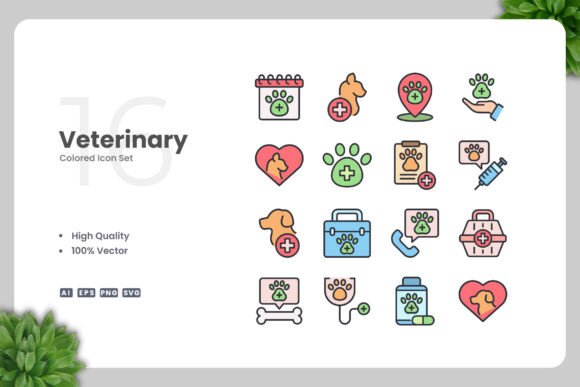
When I first opened the Veterinary Colored Icons collection, my immediate reaction was one of cautious optimism. As a designer who spends more time behind an embroidery machine than a computer screen, I have learned to be skeptical of graphics marketed primarily for digital use. The product description highlights these assets as perfect for websites, mobile apps, and print media, noting that they are easily editable in vector software. However, for those of us creating tangible goods, the question is always whether a clean digital aesthetic translates into a successful machine embroidery design.
Visually, this set strikes a balance between professional clinical precision and approachable warmth. The shapes are distinct, and the color blocking is intentional rather than chaotic. For an embroidery digitizer or a maker using pre-digitized files, this simplicity is actually a massive advantage. Complex gradients and tiny details often get lost in translation to thread, but these icons rely on bold geometry and clear silhouettes. This suggests they were created with scalability in mind, which bodes well for resizing without losing structural integrity. The mood is undeniably modern and trustworthy, making it an excellent candidate for branding projects where clarity is paramount.
Real-World Application: The Clinic Tote Bag Test
To truly evaluate these graphics, I mentally placed them into a specific, high-stakes scenario: creating custom staff tote bags for a local veterinary clinic’s annual charity fundraiser. This is a common request for Etsy sellers and small business owners. The client wants something that looks professional enough for work but cute enough to be used personally. This is where Veterinary Colored Icons shines as a versatile asset.
In this real-life application, I envisioned pairing a stethoscope icon with a paw print on a natural canvas tote bag. Because the source files are vector-based, adjusting the scale to fit a 5x7 hoop size would be seamless. The clean lines allow for a crisp satin stitch border or a smooth fill stitch interior without excessive density. On a textured canvas fabric, simpler designs perform significantly better than intricate illustrations. If I were stitching this out, the result would likely be a polished, boutique-quality item rather than a dense, bulletproof patch that puckers the fabric.
Furthermore, this project highlights the commercial viability of the set. For a craft business owner, having a cohesive set of icons means you can offer matching merchandise—tote bags, scrub caps, and keychains—that all share the same visual language. This consistency builds brand recognition for your client and perceived value for your finished products. The ability to edit colors in vector software before digitizing also means I could match the clinic’s exact branding palette perfectly, ensuring the thread colors align with their corporate identity.
Navigating Fabric Limitations and Hoop Sizes
While the design aesthetic is forgiving, physical application requires careful judgment. Not every icon in a veterinary set will behave identically across different substrates. When planning your next embroidery project, consider the following practical constraints:
- Stretchy Fabrics and Knits: If you are applying these icons to sweatshirts or scrubs, the stability of the design matters. While the vectors are clean, ensure your digitized file includes adequate underlay. A simple running stitch outline might disappear into fleece, whereas a properly stabilized fill stitch will sit on top of the nap. Always test on a scrap of the actual garment material first.
- Small Hoop Sizes and Caps: Some veterinary icons may include fine details like syringe needles or text elements. These are risky for curved surfaces like caps or small 4x4 hoops. In these instances, I recommend simplifying the design further or choosing only the boldest icons from the set. Tiny lettering rarely embroiders well; if the icon relies on text for context, it may not be suitable for headwear.
- Dark vs. Light Fabrics: The "colored" aspect of this title implies specific colorways. If you are stitching on dark navy scrubs or black aprons, verify that the design includes a white underlay or knockout layer. Without this, the fabric color will bleed through lighter thread areas, muddying the final appearance. Vector editing allows you to add this layer before generating your digital embroidery file.
- Washability: Veterinary gear gets washed frequently at high temperatures. Ensure your stitch density is sufficient to withstand industrial laundering without fraying, but not so dense that it creates holes in lightweight cotton. The clean nature of these icons helps here, as there are fewer delicate tendrils to snag.
Elevating Product Value and Customer Trust
Beyond the technical mechanics, we must discuss how Veterinary Colored Icons impacts the perceived value of your work. In the handmade marketplace, customers equate clean execution with professionalism. A jagged, poorly registered design screams "amateur," regardless of how much love went into making it. Because these graphics are designed with clean vectors, they provide a solid foundation for high-quality output.
For personalized gifts or pet memorial items, the emotional resonance of a well-executed icon cannot be overstated. A stylized, respectful heart-and-paw motif stitched cleanly onto a pillow cover carries weight. It feels intentional. Conversely, using clip-art style graphics that digitize poorly can cheapen the sentiment. By utilizing professional-grade assets, you signal to your buyer that you respect the significance of their purchase.
This professionalism extends to your marketing materials as well. Since these icons are originally intended for web and print, you can use the exact same graphics for your printable mockups, social media posts, and Etsy listing photos. This creates a seamless visual experience for the customer from the digital preview to the physical finished product. When your shop branding matches your embroidery style, it builds trust and encourages repeat business.
Critical Notes for the Commercial Maker
Before you load these files into your machine or list them in your shop, please heed these practical designer notes. They are born from years of troubleshooting both personal and commercial embroidery projects:
- Verify Licensing Terms: The description mentions ease of editing and varied uses, but it does not explicitly state the licensing terms for selling physical embroidered goods versus digital files. Always confirm whether you have the right to sell finished products or if the license is restricted to personal use or digital design assets only. Protecting your business starts with reading the fine print.
- Test Stitch Density: Do not assume the auto-digitized version is production-ready. Run a test stitch-out on scrap fabric to check for gaps, pulls, or excessive density. Adjust the settings based on your specific machine and thread type. What works for polyester thread on felt may fail with rayon on linen.
- Check Contrast and Visibility: Create black and white mockups of your chosen icons. If the design loses its meaning without color, it may not be suitable for tone-on-tone embroidery or single-color applications. Strong silhouettes should remain recognizable even in monochrome.
- Stabilizer Selection is Key: Match your stabilizer to the fabric, not just the design. Even a simple icon will distort on knit fabric without proper cut-away backing. For woven fabrics like tote bags or tea towels, a tear-away may suffice. Never skip this step to save money; it is the difference between a sellable item and a rag.
- Respect the Vector Advantage: Since you can easily edit these in vector software, take advantage of it. Customize the icons for your specific niche. Add a bone shape to a generic paw, or combine two icons to create a unique composite design. This customization makes your handmade product distinct from others using the same base assets.
Ultimately, Veterinary Colored Icons represents a valuable resource for makers who understand the bridge between digital art and textile craft. They offer the cleanliness required for professional embroidery while providing the flexibility needed for custom branding. Whether you are outfitting a clinic, creating heartfelt pet lover gifts, or expanding your Etsy inventory, these graphics provide a reliable starting point. Just remember that the file is only the blueprint; your expertise in stabilization, hooping, and finishing is what turns a vector graphic into a cherished keepsake.